 San Pedro Sula Mayan Ruins
Pulhapanzak Waterfall: Height, Fees, Zipline and the Walk Behind
Pulhapanzak waterfall is a 43 m drop on the Río Lindo and the main natural stop on any Lake Yojoa route out of San Pedro Sula. This page pulls together the height, the fee picture, which published sources do not agree on, the zipline, the guided walk behind the curtain of water, and what actually happens on a day trip here. It is written for travelers comparing options from San Pedro Sula, so the guided day trips out of San Pedro Sula comparison pages sit alongside the nature advice. If you want the falls as part of a full day, start with the Lake Yojoa day trip.
Quick answer Height, what is confirmed about fees, and how to get there
Pulhapanzak is a 43 m (about 140 ft) waterfall on the Río Lindo in San Buenaventura, Cortés, and it is generally described as the largest waterfall in Honduras. It is worth visiting if you want a full nature day rather than ruins: the stop combines a big waterfall, river swimming, an optional zipline and a guided walk behind the falls. There is an entrance fee, but no official price is published by the park operator itself, and secondary sources report figures that do not match, so treat any single number with caution. The easiest way to see it from San Pedro Sula is a guided day trip that also covers Lake Yojoa and the Taulabe caves.
Key takeaways
- See how the falls fits into a wider day on the water in our Lake Yojoa guide.
- Compare the one guided option that stops here: the Lake Yojoa, waterfall and caves day trip.
- Full fee picture and what is actually confirmed: jump to fees and prices.
- Ready to book? Read the day trip breakdown.
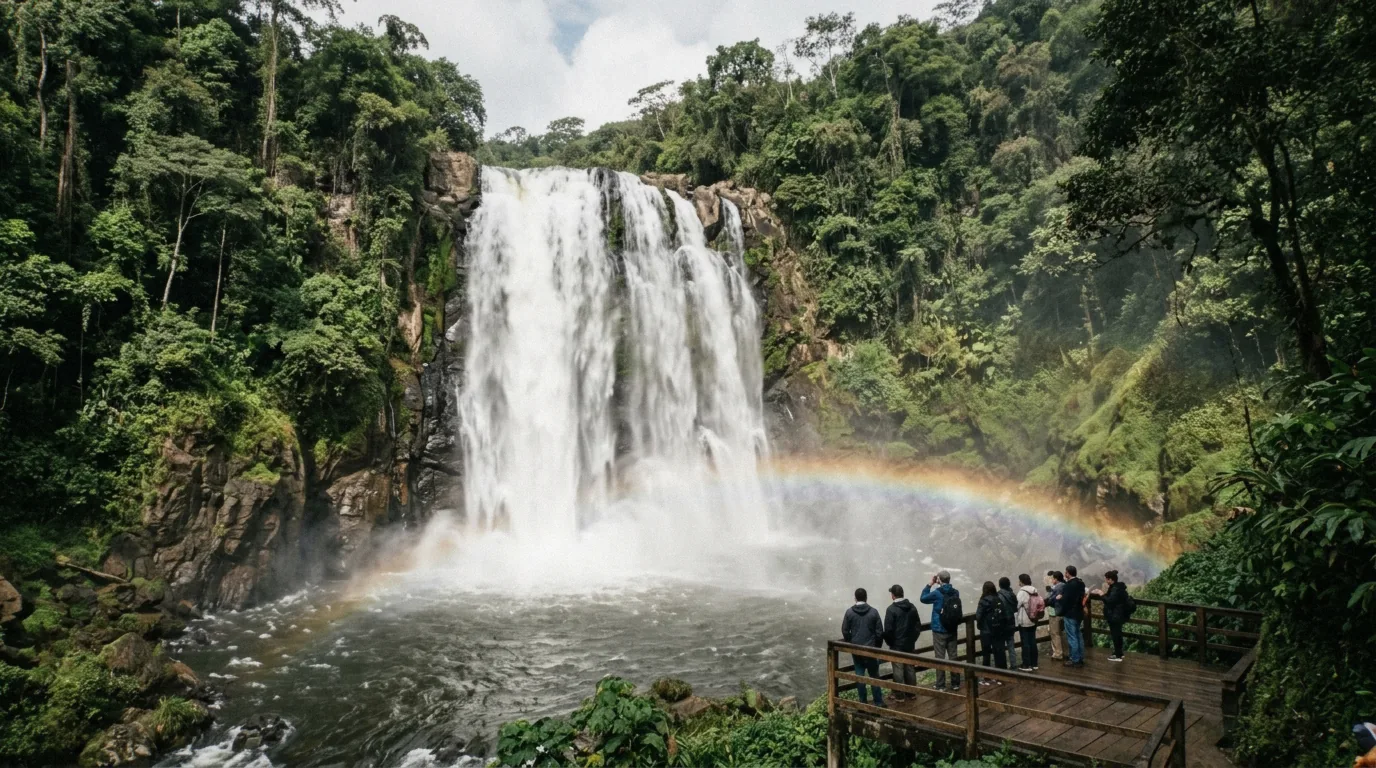
The 43 m drop on the Río Lindo.
Pulhapanzak Key Facts
These are the headline figures for the falls, with a note on where each comes from and how firm it is.
The Basics in One Table
The table below gathers the core facts about Pulhapanzak waterfall in one place. Figures marked official come from the park operator's own site, visitpulha.com. Figures marked reported come from secondary travel sources and are not confirmed by the operator, which matters most for prices and hours.
Where sources disagree with each other, the row says so rather than picking one number.
| Fact | Figure | Source |
|---|---|---|
| Height of the drop | About 43 m (roughly 140 ft) | Secondary sources, consistent across several |
| River | Río Lindo | Official park site |
| Location | San Buenaventura, Cortés (some sources say San Francisco de Yojoa) | Official park site, conflict noted |
| Entrance fee | Sources conflict, no official price published | See fees section |
| Opening hours | Reported 7:00 am to 6:00 pm daily, unofficial | Secondary source |
| Cabin rates | From about L 2,600 (1 person) to L 9,630 (6 people) per night, meals, entry and taxes included | Official park site |
| Contact | +504 3319-7282 (phone or WhatsApp) | Official park site |
Where the Name Comes From
Pulhapanzak is a Lenca-language name, not a Maya one. Sources offer different translations, including river that sinks, white river waterfall and water that falls on stone. The official park site ties it to the white river overflowing its cliff edge.
The exact translation varies depending on which source you read, so treat all of them as approximate. What is clear is that the name belongs to the Lenca linguistic tradition of western Honduras, which is one reason this site should not be marketed as a Maya destination despite appearing on itineraries alongside Maya ruins.
Sources: visitpulha.com (official park site), AllTrails, Sally Sees
Entrance Fee, Zipline and Hike Prices
Money is the confusing part of this waterfall. Here is what is confirmed, what is reported, and what nobody publishes.
The Entrance Fee Conflict
The official park operator does not publish an entrance price online, so everything you read elsewhere is a secondary report. One source reports 120 lempiras for adults and 100 for children. Another reports about 150 lempiras for foreign visitors and 70 for Honduran nationals.
These figures do not match, and neither is confirmed by the operator. The honest summary is that the entrance fee appears to fall somewhere in the range of about L 100 to L 150 per person, that sources differ, and that you can get the current price by phone or WhatsApp at +504 3319-7282. If you take a guided day trip, check whether the park entry is bundled into the tour price rather than paid at the gate.
| Item | Reported Figure | Status |
|---|---|---|
| Entrance fee (adult) | L 120 or about L 150, sources differ | Reported, not officially confirmed |
| Entrance fee (child or national) | L 100 child or L 70 national, sources differ | Reported, not officially confirmed |
| Zipline via day tour listing | $30 per person | Listed as optional extra, paid on the day |
| Hike under the waterfall via day tour listing | $20 per person | Listed as optional extra, paid on the day |
| Zipline via independent reports | L 300 to L 600, figures vary | Reported, not officially confirmed |
| Behind-the-falls guide via independent reports | About L 400 (~$15) | Reported, not officially confirmed |
| Official prices online | Not published | Operator asks you to call or message |
Optional Extras: Zipline and the Behind-the-Falls Hike
The guided Lake Yojoa day trip that stops at the falls lists two optional extras, both paid on the day: the zipline at $30 per person and the hike under the waterfall at $20 per person. Independent travelers report a wider spread of zipline prices, from 300 to 600 lempiras depending on the activity and the source, so the tour listing figure sits inside the reported range. For the behind-the-falls walk, one source cites about 400 lempiras, paid directly to the local guide on site rather than at a ticket window.
None of these independent figures carry an official date.
Cabins on Site
If you would rather sleep at the falls than day trip to them, the official park operator runs cabins. Rates run from about L 2,600 per night for one person up to about L 9,630 per night for six people, and that price includes full meals, park entry and taxes. The official site does not date these rates, so confirm the current price when you call or message.
Staying on site puts you at the waterfall before and after the day-trip crowds arrive, which is the main practical argument for it.
What You Can Do at the Falls
The waterfall itself is only the starting point. The park operator lists a full menu of activities.
The Waterfall Visit and River Swimming
The core activity is simply standing at the viewpoint while the Río Lindo drops 43 meters over the cliff. Swimming is possible, but not under the main curtain of water, where the force of the fall makes it unsafe. Instead, a calmer section of the river upstream offers safer swimming, and one source reports a lifeguard on duty there.
In the dry season the pools are calmer and more swimmable, while the rainy season brings a heavier, more dramatic flow but muddier brown water. You trade spectacle for swim quality depending on when you go.
The Walk Behind the Curtain
The signature extra is a guided tour that goes behind and under the waterfall itself. Visitor accounts describe roughly 40 minutes of walking, climbing slick rocks with a hand-held wire rope bolted into the rock, rope-assisted sections, cave exploration behind the curtain, and a rock jump of about 15 feet into a pool. You get completely soaked by spray strong enough to make breathing momentarily difficult, and expect minor cuts and bruises.
Closed-toe shoes are strongly recommended, and any non-waterproof electronics other than a GoPro will likely be ruined. Visitor accounts describe minimal formal safety oversight, with no waiver forms, and one advises against taking anyone under 16 while another suggests the tour is aimed at 14 and up, so treat it as a teen and adult activity. The guide is hired informally on site, or booked as the $20 per person extra on the guided day trip.
Zipline and the Other Park Activities
The official park site lists two zipline products, Zip Line and Canopy Tour Extremo, alongside several other named activities: river tubing, a Granja Experience farm visit, a Manantial Tour of the springs, kayaking, and the Catarata waterfall visit itself. One source describes the zipline as seven lines crisscrossing the river, but only one source says that, so think of it as multiple lines rather than a fixed count. No prices for any of these appear on the official site.
The operator asks you to call or WhatsApp +504 3319-7282 for current activity pricing, hours and bookings.
- Catarata, the waterfall visit itself
- Zip Line and Canopy Tour Extremo
- River tubing
- Granja Experience, a farm visit
- Manantial Tour of the springs
- Kayaking
Sources: visitpulha.com (official park site), Sally Sees, The Wanderlust Effect
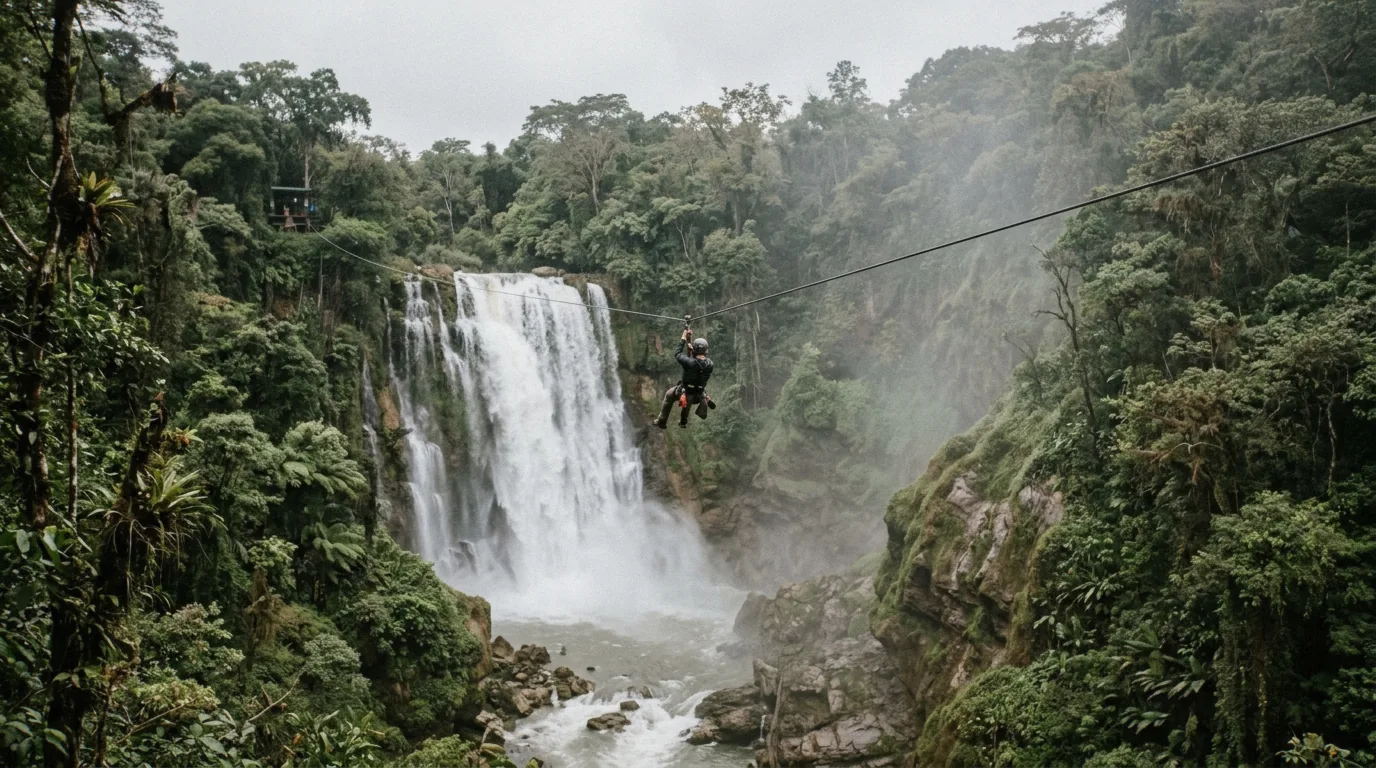
The zipline is an extra on the day trip.
The Name Is Lenca, Not Maya
A quick correction for anyone arriving here from a Maya-themed itinerary.
What the Name Actually Is
Despite appearing on routes marketed alongside the Copán ruins, Pulhapanzak has no confirmed Maya connection. The name comes from the Lenca language, with translations offered as river that sinks, white river waterfall or water that falls on stone, depending on the source. No Maya archaeological remains were found at the site in any source, including the official park site.
The nearby Lenca-era ruins are at Los Naranjos Eco-Archaeological Park on the north shore of Lake Yojoa, not at the waterfall. If your trip is built around Maya history, the Copán day trips are the destination for that, and the falls is simply a good nature contrast on a separate day.
Getting to Pulhapanzak
The falls sit north of Lake Yojoa, an easy add-on to any CA-5 journey.
Distances and Drive Times
Pulhapanzak sits in San Buenaventura in the department of Cortés, north of Lake Yojoa. Secondary sources put the drive from San Pedro Sula at about one hour, which makes it one of the closest major natural attractions to the city. From the Lake Yojoa area the drive is about half an hour, though one source measured roughly 15 minutes specifically from the D&D Brewery lodge on the lake.
The table below gathers the reported figures so you can plan around your own starting point.
| Starting Point | Reported Drive | Source Type |
|---|---|---|
| San Pedro Sula | About 1 hour | Secondary source |
| Lake Yojoa (general) | About 30 minutes | Secondary source |
| D&D Brewery, on the lake | About 15 minutes | Secondary source |
Getting There on a Guided Day Trip
If you would rather not arrange transport yourself, one guided option covers the falls as part of a longer day. The Lake Yojoa, waterfall and kayak day trip reaches Pulhapanzak in about 1.5 hours from San Pedro Sula and spends about 2 hours there, which is enough time for the viewpoint, a swim in the calmer upstream pool, and either the zipline or the behind-the-falls walk as paid extras. The same day also includes kayaking on Lake Yojoa and a visit to the Taulabe caves, with hotel pickup in San Pedro Sula and bottled water included.
Read the full day trip breakdown or go straight to the tour card.
Sources: Sally Sees, The Wanderlust Effect
Pulhapanzak Dos and Don'ts
Practical rules of thumb drawn from the tour listing and visitor reports.
Do
- Do bring a change of clothes, because the tour listing for the waterfall day explicitly asks for one and the spray from the falls soaks you through.
- Do carry your passport, because the day trip listing names it in the know-before notes.
- Do wear closed-toe shoes with grip, because the behind-the-falls route crosses very slippery wet rock.
- Do bring cash for extras, because the zipline and behind-the-falls guide fees are paid on the day rather than prebooked.
- Do visit in the dry season for swimming, because the upstream pools are calmer and the water runs clearer.
Don't
- Don't swim under the main falls, because the force of the water makes it unsafe and it is not permitted.
- Don't take non-waterproof electronics on the behind-the-falls tour, because reports say anything besides a GoPro will likely be ruined.
- Don't bring young children on the behind-the-falls walk, because visitor sources advise against it for under 14 to under 16 depending on the account.
- Don't trust a single entrance fee figure you read online, because the operator publishes no price and secondary sources conflict.
- Don't expect clear water in peak rainy season, because the flow turns brown and muddy from May to October.
Pulhapanzak as Part of a Day Trip
One guided day trip from San Pedro Sula includes the waterfall. It covers Lake Yojoa kayaking and the Taulabe caves alongside about 2 hours at Pulhapanzak, with hotel pickup, drop-off and bottled water included. It does not include meals, and the zipline and behind-the-falls walk are paid extras on the day. There is no ruins content on this tour, so if Copán is your goal, compare the Copán day trips instead.
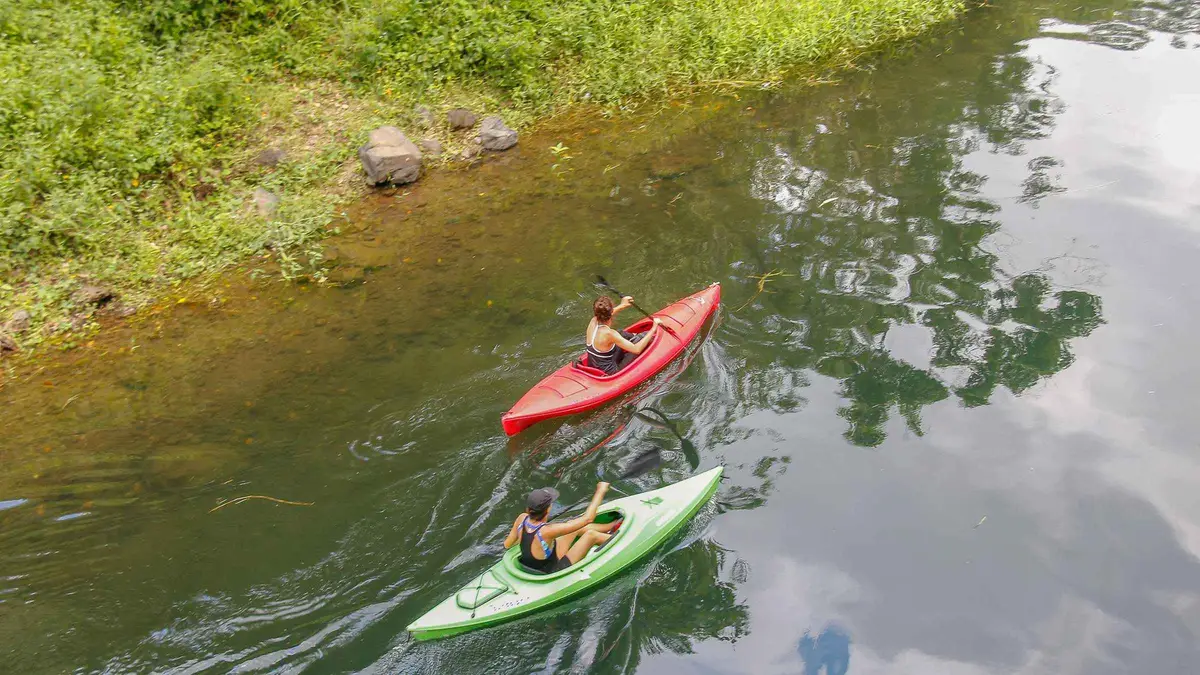
From San Pedro Sula: Yojoa Lake, Waterfall & Kayak Day Trip
Not a ruins day: two hours at Pulhapanzak waterfall, three hours on Lake Yojoa with kayaks, and the Taulabe caves, with hotel pickup and bottled water. The zipline ($30) and the walk behind the falls ($20) are paid extras, and meals are not included.
- Cancellation
- Free cancellation 24h
- Operator
- iCatracho Tours
Watch Before You Go
A third-party video, embedded from YouTube. We have no relationship with its creator.
Pulhapanzak Waterfall: Questions
Is Pulhapanzak worth visiting?
For most travelers passing through the Lake Yojoa area, yes. It is widely described as the largest waterfall in Honduras, with a 43 m drop, and it offers more than a viewpoint: swimming in a calmer upstream pool, an optional zipline, and a guided walk behind the curtain of water. It pairs naturally with a lake day, as on the Lake Yojoa and waterfall day trip.
What are the best waterfalls to visit in Honduras?
This guide covers Pulhapanzak, which secondary sources consistently call the largest waterfall in the country, so it is the natural first choice if you are based in San Pedro Sula. For a broader look at the country's Maya-era sites that usually anchor the same itineraries, see the guide to Mayan ruins in Honduras.
Is there an entrance fee to Pulhapanzak?
There is a fee to enter, but the official park operator publishes no price online, and secondary sources conflict, reporting figures from about L 100 to L 150 per person. Treat any single number you read as unverified and confirm by phone or WhatsApp at +504 3319-7282, or book through a guided day such as the Lake Yojoa tour.
Can you swim at Pulhapanzak?
Yes, but not under the main falls, where the force of the water makes swimming unsafe and off limits. A calmer upstream section of the river is the swimmable spot, with a lifeguard reported on duty. The pools are calmest in the dry season, which is one reason the Lake Yojoa area guide recommends visiting between November and April.
How far is Pulhapanzak from San Pedro Sula?
Secondary sources put the drive at about one hour from San Pedro Sula, and about half an hour from the Lake Yojoa area. On the guided day trip the vehicle covers the route in about 1.5 hours and spends about 2 hours at the falls, alongside lake kayaking and the Taulabe caves. Details are on the day trip page.
Is the walk behind the waterfall safe?
It is a real adventure activity with real risks. Visitor accounts describe no waiver forms, slippery wet rock, a hand-held wire rope through spray with zero visibility, and a rock jump of about 15 feet, with sources suggesting a minimum age somewhere between 14 and 16. Closed-toe shoes are essential. The guided tour listing offers it as an optional extra for those who want it.